
£49.99 – £74.99Price range: £49.99 through £74.99
For research use only — Not for human or animal use
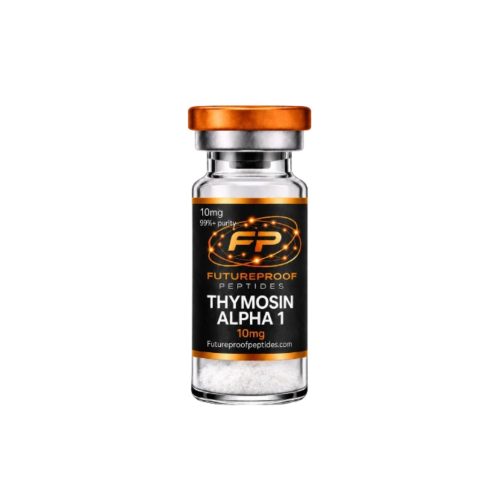
Thymosin Alpha-1 is a research peptide supplied in lyophilised form for controlled laboratory and analytical studies. Thymosin alpha-1 has attracted scientific interest because of its relationship with the immune system and the regulation of several types of immune response.
Research into Thymosin Alpha-1 has examined its interactions with different immune cells and signalling pathways, including dendritic cells and mechanisms associated with immune cell activation. These properties have led researchers to investigate the peptide across areas including immunology, inflammation, viral research and cellular biology.
Thymosin Alpha-1, also known as thymalfasin, is a synthetic form of a naturally occurring thymic peptide. It consists of 28 amino acids and has been studied extensively for its immunomodulatory properties.
Rather than acting on one isolated biological process, research suggests that Thymosin Alpha-1 can interact with multiple components of innate and adaptive immunity. This makes it useful for investigating how different parts of the immune system communicate and respond to biological challenges.
Research involving Thymosin Alpha-1 has explored several areas of immune function. Scientists are interested in whether the peptide can help regulate how immune cells recognise and respond to different biological threats.
These potential benefits describe areas of scientific investigation and should not be interpreted as established therapeutic benefits.
A major focus of Thymosin Alpha-1 research concerns immune regulation. Laboratory studies have investigated its influence on several immune cell populations and the signalling processes responsible for coordinating immune activity.
Dendritic cells are particularly important because they help the immune system identify antigens and coordinate subsequent responses. Researchers have also examined how thymosin alpha may influence T-cell and natural killer cell activity, providing additional insight into mechanisms associated with immune defence.
Research has additionally considered signalling molecules involved in inflammation, including tumor necrosis factor and other cytokine pathways. Understanding these interactions may help scientists investigate how immune activity and the inflammatory response are regulated.
Another established area of scientific interest involves viral immune-response models. Researchers have examined how Thymosin Alpha-1 influences immune activity when cells are exposed to viral challenges or are virally infected.
Some experimental research has also examined Thymosin Alpha-1 alongside antiviral agents. The purpose of this work is to better understand interactions between immune-modulating pathways and established antiviral mechanisms rather than to classify the peptide itself as an antiviral medicine.
Because Thymosin Alpha-1 influences immune signalling, researchers have investigated its mechanisms in experimental models relevant to autoimmune diseases and immune dysregulation.
This area is particularly complex because enhancing immune activity is not necessarily desirable in every situation. Scientists therefore study the peptide’s wider immunomodulatory effects, including how different immune pathways may be activated or regulated under specific experimental conditions.
Thymosin Alpha-1 has also appeared in preclinical and clinical research concerning immune function in oncology. Research areas have included hepatocellular carcinoma, lung cancer and breast cancer, among other tumour models and clinical settings.
Experimental studies have investigated processes such as cell proliferation, immune-cell activity and induced apoptosis. Apoptosis is the controlled process through which cells undergo programmed cell death, making it an important mechanism in cellular and cancer biology research.
These studies do not establish Thymosin Alpha-1 as a treatment for cancer. Findings can differ substantially according to the experimental model, disease setting and other interventions being studied.
The immune system contains many different types of cells that need to communicate with one another. Thymosin Alpha-1 is interesting to researchers because it appears to influence some of the signals involved in this communication.
Scientists can therefore use it to investigate questions such as how immune cells become active, how the body coordinates responses to biological challenges and how inflammation is controlled.
This explains why the same compound appears in research covering viral responses, inflammation, immune dysfunction and cancer biology. Researchers are studying the underlying immune mechanisms rather than assuming that one compound produces the same result across every condition.
Researchers have also investigated longer-term use and observation in specific clinical research settings. Long-term findings cannot automatically be generalised between different populations or research models, however.
Continued research is necessary to understand the biological effects, safety considerations and significance of prolonged exposure under different experimental conditions.
The biological activity of Thymosin Alpha-1 means appropriate laboratory controls should be used when conducting research. Observations from one experimental or clinical setting should not be assumed to apply universally, particularly when studying immune regulation.
| Specification | Details |
|---|---|
| Product Name | Thymosin Alpha-1 |
| Alternative Name | Thymalfasin |
| Strength | 10 mg |
| Product Type | Synthetic research peptide |
| Peptide Length | 28 amino acids |
| Molecular Formula | C129H215N33O55 |
| Molecular Weight | Approximately 3108.3 g/mol |
| CAS Number | 62304-98-7 |
| Appearance | Lyophilised powder |
| Research Areas | Immunology, immune signalling, inflammatory pathways and cellular research |
| Intended Use | Laboratory research only |
Discount Applied Successfully!
Your savings have been added to the cart.