
£69.99
For research use only — Not for human or animal use
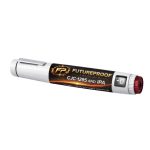
Our CJC-1295 & Ipamorelin pen combines two research peptides that act through different hormonal pathways connected to endogenous growth hormone (GH) secretion. CJC-1295 is a GHRH analogue, while ipamorelin is a selective growth hormone secretagogue associated with the ghrelin receptor.
The combination is of interest in peptide research because the two compounds approach GH release through separate receptor systems. This allows researchers to investigate the relationship between growth hormone-releasing hormone (GHRH), ghrelin signalling, the anterior pituitary and downstream GH/IGF-1 activity within the same research model.
CJC-1295 is a synthetic analogue of GHRH, the hormone produced by the hypothalamus that communicates with the pituitary gland. It binds to the GHRH receptor on somatotroph cells within the anterior pituitary, stimulating the synthesis and release of growth hormone.
Ipamorelin works differently. It is a five-amino-acid growth hormone secretagogue originally identified for its ability to stimulate GH release through a GHRP-like receptor, now associated with the growth hormone secretagogue receptor GHS-R1a, commonly known as the ghrelin receptor.
The important distinction is that the compounds do not simply duplicate one another. They provide two separate molecular routes for studying the regulation of endogenous GH.
The scientific rationale for studying CJC-1295 alongside ipamorelin comes from their different receptor targets.
CJC-1295 activates the GHRH receptor, supporting the signalling normally initiated by endogenous growth hormone-releasing hormone. Ipamorelin activates the growth hormone secretagogue pathway through the ghrelin receptor.
| Compound | Primary Research Target | Research Role |
|---|---|---|
| CJC-1295 | GHRH receptor (GHRHR) | GHRH analogue investigated for sustained stimulation of GH secretion |
| Ipamorelin | GHS-R1a / Ghrelin receptor | Selective growth hormone secretagogue investigated for GH release |
Studying these pathways together provides a model for examining how separate hormonal signals converge at the pituitary gland and influence the wider somatotropic axis.
One of the defining characteristics of CJC-1295 with Drug Affinity Complex (DAC) is its extended biological activity. The DAC modification enables the compound to bind to circulating albumin, substantially extending its duration compared with native GHRH.
In double-blind, placebo-controlled human research, a single administration of CJC-1295 produced dose-dependent increases in mean plasma GH concentrations of approximately 2 to 10-fold for six days or longer. Mean IGF-1 concentrations increased approximately 1.5 to 3-fold for 9 to 11 days.
The same research estimated a half-life of approximately 5.8 to 8.1 days. Separate human work found that CJC-1295 increased overall GH secretion while preserving the natural pulsatile pattern of GH release.
These findings make CJC-1295 particularly relevant to research examining prolonged GHRH receptor activation and the relationship between GH secretion and IGF-1.
Ipamorelin attracted scientific attention because of its selectivity as a growth hormone secretagogue.
Early pharmacological studies found that Ipamorelin stimulated GH release in experimental models while producing substantially less activity involving ACTH and cortisol than older secretagogues such as GHRP-2 and GHRP-6.
This gives ipamorelin a different research profile from CJC-1295. Instead of extending GHRH signalling, it allows researchers to examine how selective activation of the ghrelin receptor pathway influences pituitary GH secretion.
Research into the GH/IGF-1 axis extends across a wide range of biological processes. Growth hormone and IGF-1 signalling are involved in protein metabolism, tissue development, substrate utilisation and the regulation of body composition.
This has led to experimental interest in areas including:
Terms such as enhancing recovery and anti-ageing are frequently associated with growth hormone peptides commercially, but these should not be treated as established benefits of the CJC-1295 and ipamorelin combination. The evidence for individual biological pathways is different from evidence that a combined research formulation produces a particular outcome.
The CJC-1295 & Ipamorelin Pen is supplied as a prepared research formulation for controlled laboratory handling.
Maintain the product under the refrigerated conditions specified for the individual formulation. Protect it from excessive heat and direct light, and avoid unnecessary temperature fluctuations that could affect peptide stability.
Disclaimer: This product is supplied strictly for laboratory research purposes only. Not for human or animal consumption.
| Specification | Product Information |
|---|---|
| Product | CJC-1295 & Ipamorelin Pen |
| Active Compounds | CJC-1295 and Ipamorelin |
| Compound Class | GHRH analogue and growth hormone secretagogue |
| CJC-1295 Target | Growth hormone-releasing hormone receptor (GHRHR) |
| Ipamorelin Target | Growth hormone secretagogue/ghrelin receptor (GHS-R1a) |
| Ipamorelin Structure | Five-amino-acid peptide (pentapeptide) |
| Primary Research Axis | GH/IGF-1 somatotropic axis |
| Site Of GH Release | Anterior pituitary |
| Research Focus | Endogenous GH secretion, pituitary signalling, GHRH and ghrelin receptor biology |
| Presentation | Prepared pen-based research formulation |
| Storage | Maintain under controlled refrigerated conditions according to the supplied product specification |
| Protection | Protect from excessive heat and direct light |
| Intended Application | Laboratory peptide research only |
| Restriction | Not intended for human or animal consumption |
Discount Applied Successfully!
Your savings have been added to the cart.
Added to cart