£109.99
For research use only — Not for human or animal use
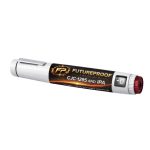
Our KLOW Blend 80mg Pen is a four-component research peptide blend combining BPC-157, TB-500, GHK-Cu and KPV in a single research formulation. It brings together compounds studied across different areas of tissue biology, including extracellular matrix activity, inflammatory signalling, cellular migration and tissue remodelling.
The formulation contains 50mg of GHK-CU, alongside 10mg of BPC-157, 10mg of TB-500 and 10mg of KPV. KLOW Blend provides a multi-component formulation for laboratory research involving several interconnected biological processes.
KLOW Blend combines four research compounds with different characteristics. Each component has its own area of scientific interest, giving researchers a broader formulation than a single-peptide preparation.
The individual components should not be considered interchangeable. Their different structures and research profiles are the reason they are combined within the KLOW formulation.
The rationale behind a peptide blend is to investigate several biological processes within the same experimental model rather than repeatedly targeting one mechanism.
GHK-Cu introduces copper-binding activity and extracellular matrix research. BPC-157 adds a separate area of interest surrounding tissue-response pathways, while TB-500 is associated with actin dynamics and cellular movement. KPV provides another distinct research angle involving inflammatory signalling.
This creates potential applications in laboratory models where tissue structure, cellular movement and inflammatory response need to be observed alongside one another.
Importantly, evidence for the individual compounds varies considerably. Findings involving one ingredient cannot automatically be attributed to the complete KLOW Blend, and results from preclinical experiments should not be treated as established clinical outcomes.
GHK-Cu and extracellular matrix biology: GHK-Cu binds copper ions and has been investigated for its influence on enzymes and signalling pathways involved in collagen, extracellular matrix organisation and structural tissue turnover.
BPC-157 and tissue-response models: Much of the published BPC-157 literature comes from animal and laboratory studies. Experimental work has examined gastrointestinal tissue, vascular signalling and responses following different forms of tissue injury.
TB-500 and cellular movement: Research related to thymosin beta-4 has helped establish scientific interest in actin regulation. Actin is a structural protein involved in cell shape, movement and organisation, making this pathway relevant to studies of cellular migration.
KPV and inflammatory signalling: KPV is a short three-amino-acid fragment associated with α-MSH research. Experimental studies have investigated pathways including NF-κB signalling and inflammatory mediator activity.
Together, these mechanisms give the blend a wider experimental profile without requiring the same biological explanation to be repeated for every ingredient.
For multi-component formulations, analytical verification is particularly important because the preparation contains several compounds rather than a single research peptide.
HPLC analysis can be used as part of laboratory quality assessment to examine chromatographic purity and identify components within a sample. Analytical documentation should always be interpreted according to the testing methodology and specification supplied for the relevant batch.
KLOW Blend should be handled using appropriate laboratory procedures, with storage conditions kept stable throughout the research period.
KLOW Blend 80mg Pen should be stored according to the temperature and stability requirements provided with the formulation. Protect the product from excessive heat and direct light and avoid unnecessary temperature fluctuations during storage.
Disclaimer: This product is supplied for research use only and is intended strictly for laboratory research. It is not intended for human or veterinary use.
| Specification | Details |
|---|---|
| Product | KLOW Blend 80mg Pen |
| Product Type | Multi-component research peptide blend |
| Total Content | 80mg per pen |
| Components | BPC-157, TB-500, GHK-Cu and KPV |
| GHK-Cu Content | 50mg |
| KPV Content | 10mg |
| GHK-Cu Type | Copper-binding tripeptide (Gly-His-Lys-Cu) |
| KPV Sequence | Lys-Pro-Val |
| Research Profile | Extracellular matrix biology, inflammatory signalling, actin dynamics, cellular migration and tissue-response research |
| Analytical Method | HPLC analysis where specified by the applicable batch documentation |
| Format | Pen-based research formulation |
| Storage | Store under controlled refrigerated conditions according to the supplied product specification |
| Protection | Protect from excessive heat and direct light |
| Intended Use | Laboratory research purposes only |
| Restriction | Not intended for human or veterinary use or consumption |
Discount Applied Successfully!
Your savings have been added to the cart.
Added to cart